Winter at ZOO Ljubljana reveals a very different pulse to the zoo. Without the summer crowds, the visit becomes more relaxed, almost intimate, and the animals can be observed up close and for longer. Although many visitors think that in winter almost all the animals hide in warm shelters, the truth is often quite the opposite. If you want to see the animals in their winter and courtship attire, and to watch them in their sparring and courtship techniques, winter is the right time to visit.
Some animals are even livelier in the colder part of the year
The red pandas are adapted to cooler conditions, so fresh air and lower temperatures, similar to the climate of their natural habitat, suit them very well. They are perfectly adapted to these conditions with a dense coat and a bushy tail that they wrap around their bodies like an extra "blanket". Our animals from northern lands, such as moose and reindeer, are often livelier in winter than in summer. The male moose Olaf, named after the famous snowman from the cartoon Frozen, will soon shed his antlers, while the female Queeny does not have any at all. A thicker and softer winter coat also "adorns" sika, hog and reindeer and other hoofed animals at this time.
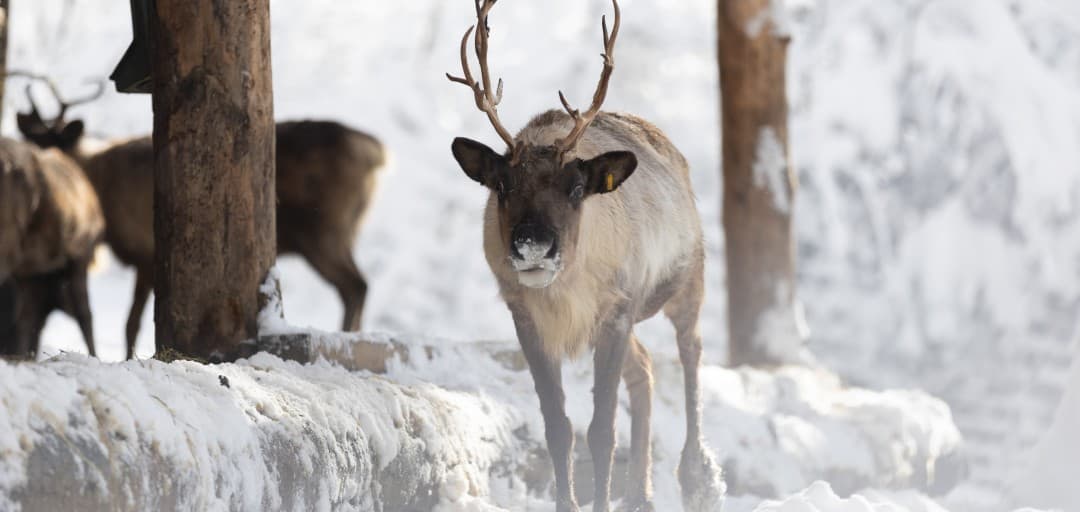
A special point of interest is "Santa’s" reindeer. The males have already lost their antlers at the end of the rutting season. Even so, you will see reindeer with antlers in the enclosure — but these are not males but females, the only antlered representatives of the deer family. They often keep their antlers until March or even April. In the wild they use them to access food beneath the snow, so they can prepare well for giving birth in May. At ZOO Ljubljana they offer visitors an interesting glimpse into the less well-known differences between the sexes.
When the reindeer finish their shows of strength, the fights flare up in the enclosure of the Alpine ibex. Between December and January, the zoo’s mountain slopes briefly turn into a stage for the loud clashes of mighty horns. During this time the males stage dramatic duels and courtship contests, in which experience and endurance matter, not just strength.
Winter conditions are also handled very well by Siberian tigers, which are adapted to the cold with a dense undercoat that acts as insulation, a longer winter coat that repels snow and prevents the skin from getting wet, and an extra layer of subcutaneous fat that helps retain heat. The dense coat with its fatty layer acts as a natural winter jacket protecting the Siberian tigers on the coldest days. Winter conditions often even boost their activity.
Last year’s birthday girl, Ganga the elephant, also loves snow. Her keepers occasionally make her a snowman and hide treats inside it to encourage exploratory behaviour. Since last year she has had new strip curtains, so she can decide when she wants to be out in the fresh air and when she would rather stay in the warmth.
The cold part of the year also brings our "wild ZOO" to life. Feeders and suet cakes on the hill attract many local birds and offer a chance to watch them in peace — either live, on a walk, or from home via live camera.
Curator Saša Purkart says of the winter preparations: "Every year we prepare carefully for winter at the zoo. All animals have the option to retreat to shelter or heated areas; some even use heated rocks on which they can rest, such as the Asiatic lions. In addition, we slightly increase the rations of many animals during the colder period, as their energy needs are higher due to low temperatures."
Winter sleepers
Anyone who has not yet seen a winter sleep or hibernation of the brown bear has a unique opportunity at ZOO Ljubljana. The bear Pombi sleeps in a wide pipe, wrapped in straw, often with her head turned towards the visitors. Occasionally she wakes up, takes a short walk and defecates, then continues her winter nap. At ZOO Ljubljana we provide animals with conditions as close to natural as possible. In autumn we therefore feed them with more energy-rich food so they can build up stores of the special brown fat that enables a calm winter rest. As well as the bears, the Greek and Russian tortoises, pond turtles, sheltopusik, Aesculapian snakes, salamanders and tenrecs also sleep in their winter quarters.
Protection against the cold
Winter is spent very differently by Canadian beavers. They do not hibernate, so they can often be seen on land nibbling their daily ration — branches, leafy and root vegetables. A dense, water-repellent coat and a layer of subcutaneous fat (which doubles as an energy reserve) protect them from the cold. For rest they retreat to a dry, warm den, which in the indoor beaver area at ZOO Ljubljana can also be seen nicely by visitors.
"Surprisingly, some savannah and desert species are also among the more active ones in colder weather. They are adapted to large temperature swings, hot days and cold nights in their natural habitat, so lower temperatures — with suitable shelter — are not a particular problem for them. These include, for example, antelopes, ostriches and Bactrian camels,” explained keeper Anže Rupnik of ZOO Ljubljana.
Despite the fact that many people think winter is not a time to visit the zoo, they are very much mistaken. ZOO Ljubljana in winter is not only a place to watch the animals, but also a pleasant natural oasis in the middle of the city. A winter walk through the zoo offers fresh air, peace, a different view of the animals and a sense of being part of nature even at a time when nature seems to have retreated into silence. Have you ever taken binoculars to the zoo? We invite you to try this practical visual aid at least once.
We have shown only a small glimpse of zoo life — it is also lively and interesting with the other animals in winter, as you can discover for yourself. That is exactly why winter is one of the loveliest times to visit the zoo.