Welcome, Chimpanzee Togo
26. February 2026
26. February 2026
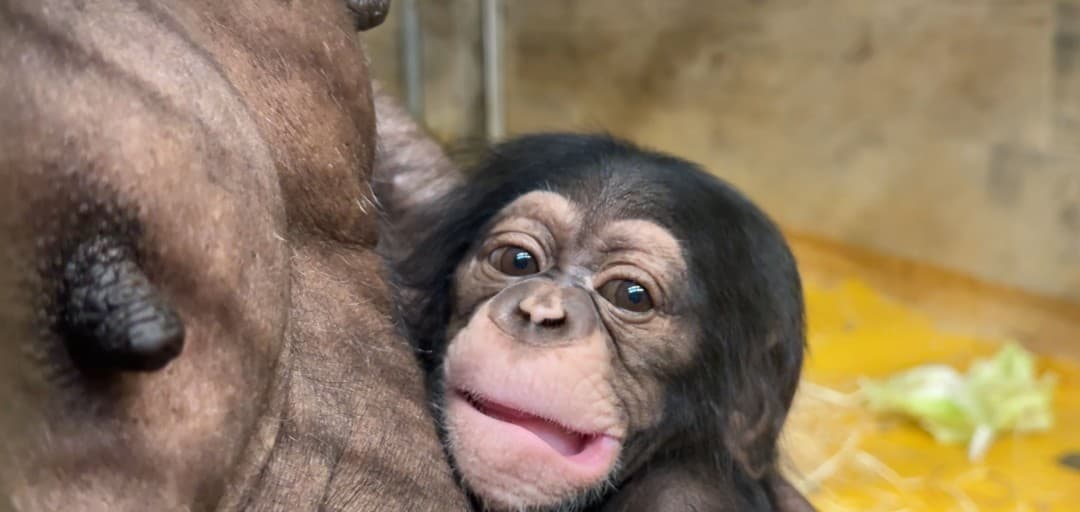
The chimpanzee family at ZOO Ljubljana has a new member.
On 2 January this year, 27-year-old chimpanzee Neža, daughter of the charismatic Mojca, gave birth to a baby, Togo. He is her third baby, joining his sister Leona and brother Tai. His father is male Boris, who came to Ljubljana from Zagreb Zoo. The birth went calmly and without complications. Keepers had already noticed changes in Neža’s behaviour that morning and expected the birth to be near. As an experienced mother, Neža did everything on her own, while our keepers discreetly monitored events from a distance.
A name that highlights the species’ endangered status
The baby was named Togo after the West African country where western chimpanzees have already become locally extinct in the wild. Their population has fallen sharply in recent decades due to habitat loss, deforestation, mining and expanding agriculture, as well as diseases that can pass from humans to chimpanzees. By choosing this name, we want to draw attention at the zoo to the species’ vulnerability and the importance of conserving natural habitats.
Care for the baby and his mother
The veterinary and keeper team monitor the baby’s development mainly through observation. They check whether he is suckling regularly, gaining weight and developing normally, while ensuring mother and baby have peace to establish a strong bond. Chimpanzees are very sensitive to human diseases, so staff take protective measures in their work and ask visitors to behave respectfully at the enclosure.
The first months of life
Pregnancy in chimpanzees lasts around seven and a half months, and the young are born completely dependent on the mother. For the first months they feed exclusively on mother’s milk. Around 3 to 6 months they gradually start tasting solid food, exploring their surroundings and bonding more closely with other family members. Nursing can last four to five years, and during this time the young learn social rules, communication and tool use.
"Every new birth brings joy to the zoo, but also new challenges for us vets. Neža shows us the baby so we can assess him visually — we check the number of fingers and any congenital abnormalities — but she does not allow photography. Through observation and cooperation with keepers we monitor whether the baby is suckling, gaining weight and developing normally," said head vet at ZOO Ljubljana, Dr Pavel Kvapil.
Gradual introduction to the public
Keepers do not present the baby to the public straight away, as they want to ensure a calm postnatal period and successful integration into the family group.
We ask visitors to behave calmly and respectfully when visiting the chimpanzee family:
- no tapping on the glass,
- no flash photography,
- no feeding the animals.
- If you are ill, please keep a step or two away.
By following zoo etiquette together, we ensure the visit is safe and enjoyable for animals and people alike.